Home Blog

Towards an Effective Reform of the Biological Rest Fund and Strengthening the Sustainability of Marine Fisheries in Tunisia

Towards an Effective Reform of the Biological Rest Fund and Strengthening the Sustainability of Marine Fisheries in Tunisia

1. Introduction As part of its ongoing efforts to promote sustainable fisheries and protect marine resources, the Tunisian Association for Sustainable Fisheries presents this report to highlight key issues related to the Biological Rest Fund. The report proposes practical solutions to ensure fair distribution, improve governance, and enhance the fund’s effectiveness in protecting fish stocks. The association also reaffirms its willingness to collaborate with the Ministry of Agriculture, Water Resources, and Fisheries, as well as sector stakeholders, to develop effective solutions.

2. The Importance of Biological Rest and the Role of the Fund Biological rest is a crucial mechanism for preventing the depletion of fish stocks by enforcing a temporary fishing halt or reduction in fishing activities to allow resource regeneration. To support fishers during these periods, the Biological Rest Fund was established to compensate those affected by the suspension, ensuring a balance between environmental conservation and the economic sustainability of fishers.

3. The Biological Rest Fund in Tunisia The fund was created to support fishers during fishing bans by providing financial compensation. It is financed through contributions from vessel owners and the government, offering grants to fishers and boat owners affected by biological rest measures. However, concerns remain regarding its effectiveness in achieving environmental and social objectives, particularly in regions like the Gulf of Gabès.

4. Evaluating the Fund’s Performance in Protecting Fish Stocks in the Gulf of Gabès Despite the necessity of biological rest to safeguard fish stocks, its implementation in Tunisia—especially in the Gulf of Gabès—has not yielded the expected environmental benefits. The suspension applies primarily to trawlers, while other fishing methods, such as illegal purse seine fishing, continue to exploit marine resources. Consequently, the fund has become more of a professional compensation tool rather than an environmental protection measure, necessitating a comprehensive review to ensure it meets its intended goals.

4.1. Grants Allocated to Trawlers During Biological Rest A major concern is the allocation of grants to trawlers during the biological rest period in the Gulf of Gabès. These grants are often unjustified since many of these vessels operate beyond the 50-meter depth contour, outside the designated protection areas. As such, they are not directly impacted by the ban, making their eligibility for compensation both environmentally and economically questionable. A reassessment of grant eligibility criteria is essential to ensure that support reaches genuinely affected fishers.

5. Proposals to Improve Fund Efficiency

5.1. Expanding the Scope of Biological Rest

  • Inclusion of all impactful fishing methods: The biological rest period should cover all fishing practices that affect fish stocks, not just trawlers.
  • Strengthened monitoring: Enhanced inspections and surveillance to curb illegal fishing activities during biological rest periods.
  • Involvement of professionals: Engaging fishers and industry professionals in determining biological rest periods and their enforcement areas to ensure alignment with ecological and social realities.

5.2. Reforming the Grant Distribution Mechanism

  • Revising eligibility criteria: Grants should be distributed based on fair standards reflecting the economic and social realities of fishers while excluding those not directly affected by biological rest.
  • Linking grants to social security: Fisher compensation should be tied to registration with the National Social Security Fund (CNSS) to secure their rights.
  • Adjusting grant calculations: Compensation should be based on average declared wages over the preceding three quarters for all crew members and vessel owners to ensure equitable distribution.
  • Expanding beneficiary categories: Extending eligibility to other sector workers, especially when biological rest applies to entire marine zones or species facing overfishing.
  • Developing a digital platform: Streamlining administrative procedures through digitalized grant applications and mechanisms to ensure direct and efficient fund distribution to eligible fishers.

6. Key Areas for Utilizing Fund Surpluses

6.1. Supporting Professional Organizations Allocating grants to fishing development cooperatives and professional service companies to:

  • Reduce production costs: Providing fishing gear at competitive prices.
  • Develop alternative economic activities: Promoting eco-tourism, marine aquaculture, and sustainable fishing equipment manufacturing to create additional income sources for fishers and their families.

6.2. Protecting Coastal Zones

  • Enhancing fishery resources: Deploying artificial reefs and supporting marine plant conservation programs such as Posidonia seagrass.
  • Improving infrastructure: Funding small port maintenance projects and equipping traditional fishing landing sites.

6.3. Encouraging Marine Aquaculture

  • Supporting small-scale projects: Financing small fish and shellfish farming units for traditional fishing communities.
  • Training and technical support: Providing educational programs for fishers interested in sustainable marine aquaculture.

6.4. Promoting Sustainable Practices

  • Raising awareness and providing marine guidance: Establishing regional centers for supporting traditional fishers, similar to agricultural extension services.
  • Training fishers: Financing programs on responsible fishing techniques and environmentally friendly practices.
  • Encouraging eco-friendly equipment: Promoting the use of less harmful fishing gear.

6.5. Supporting Research and Development

  • Funding scientific research: Investing in field studies on traditional fishing and sustainable practices.

6.6. Enhancing Infrastructure at Traditional Fishing Ports and Landing Sites

  • Establishing well-equipped landing sites: Providing services such as refrigeration, storage, fuel stations, and local fish markets with adequate docking facilities for traditional fishing boats.

6.7. Strengthening Monitoring and Combating Illegal Fishing

  • Enhancing surveillance systems: Allocating part of the surplus funds to improve marine fisheries monitoring and enforce biological rest compliance.
  • Promoting co-management of fishery resources: Involving traditional fishing communities alongside government institutions in managing and conserving marine ecosystems.

7. Developing a National Strategy to Protect Small-Scale Fisheries There is an urgent need to establish a National Action Plan for Small-Scale Fisheries that aligns with the FAO’s 2014 Voluntary Guidelines for Securing Sustainable Small-Scale Fisheries. This plan should empower traditional fishers to participate in decision-making and strengthen cooperatives as a mechanism for sector organization and fisher rights protection.

8. Conclusion Reforming the Biological Rest Fund requires structural measures to enhance governance, transparency, and fair resource distribution. The Tunisian Association for Sustainable Fisheries reaffirms its commitment to contributing to effective policy development in partnership with the ministry and industry stakeholders, ensuring the sustainability of marine resources while safeguarding fisher livelihoods.

Naoufel Haddad is the Secretary-General of the Tunisian Society for Sustainable Fisheries, an organization committed to promoting responsible and sustainable fishing practices in Tunisia.
Call from the Tunisian Association for Sustainable Fishing at the 2nd World Small-Scale Fisheries Summit: Creation of a Reserved Maritime Zone

Call from the Tunisian Association for Sustainable Fishing at the 2nd World Small-Scale Fisheries Summit: Creation of a Reserved Maritime Zone

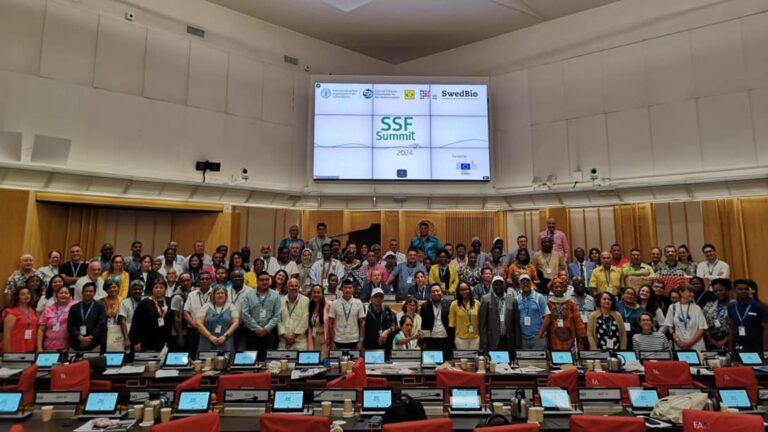
Rome, July 7, 2024 – At the 2nd World Small-Scale Fisheries Summit, held at the FAO headquarters in Rome from July 5 to 7, 2024, the Tunisian Society for Sustainable Fishing issued a crucial call for the creation of a maritime zone reserved for small-scale fishing. This call, titled “For Sustainable Small-Scale Fishing: Call for the Creation of a Reserved Maritime Zone,” seeks the support of partners and decision-makers in the sector for an initiative that could transform the sustainability of small-scale fishing in the Mediterranean region and beyond.

Objectives and Justifications of the Call

  1. Support for Small-Scale Fishing and Local Communities:
    Small-scale fishing plays a vital role in the economic, social, and cultural contexts of the Mediterranean. By reserving a specific maritime zone for this activity, the Tunisian Association for Sustainable Fishing aims to ensure equitable access to fishery resources for artisanal fishers while protecting their livelihoods and traditions.
  2. Protection of Marine Ecosystems:
    In accordance with the FAO’s guidelines on small-scale fisheries, the establishment of this reserved zone will minimize negative impacts on marine habitats and preserve biodiversity. The exclusive use of passive and non-destructive gear will align small-scale fishing practices with marine conservation objectives.
  3. Sustainable Management and Conservation Measures:
    The management of this zone will involve active surveillance and participatory control measures to ensure the regeneration of fish stocks and the long-term sustainability of fisheries. Data collection, the integration of local ecological knowledge, and adaptation to climate change will be key elements of this management.

Implementation Proposal

  1. Delimitation of the Zone:
    The reserved zone will include maritime areas of gulfs, bays, and the 3-mile coastal strip. This delimitation will allow for specific and targeted resource management.
  2. Regulation and Surveillance:
    Surveillance and control systems will be established, including participatory mechanisms with local fishers to ensure compliance with the rules. Sanctions will be applied in cases of non-compliance.
  3. Engagement of Fishers and Communities:
    Fishers will be actively involved in the management, data collection, and surveillance processes, ensuring a participatory and inclusive approach. Training and technical assistance will be provided to improve sustainable fishing practices and promote innovations in the small-scale fishing value chain.
  4. Adaptation to Climate Change:
    Specific strategies will be developed to help small-scale fishing communities adapt to the impacts of climate change, ensuring their resilience and the sustainability of their activities.
  5. Promotion of Women’s Participation and Gender Equity:
    Initiatives will be implemented to ensure the equitable participation of women in decision-making and activities related to small-scale fishing, in line with the objectives of the RPOA-SSF.

The Tunisian Society for Sustainable Fishing emphasized the crucial importance of this initiative to ensure a sustainable future for our fishing communities and to protect the fragile marine ecosystems of the region. The association firmly opposed the establishment of offshore fishing ports welcoming trawlers in regions such as gulfs, which are rich in biodiversity and have a vast, shallow continental shelf.

This urgent call, distributed during the summit, seeks the action of competent authorities and partners for the implementation of this initiative in accordance with the principles of the RPOA-SSF and international guidelines on small-scale fishing. The Association remains available for any additional information and to discuss the implementation modalities of this proposal.

How can the EU-AU partnership support sustainable artisanal fisheries?

How can the EU-AU partnership support sustainable artisanal fisheries?

As the International Year of Artisanal Fisheries and Aquaculture (IYAFA 2022) gets underway, African artisanal fisheries have never been more vital to the survival of coastal communities and the food security of African populations. The future will be full of challenges for these communities, especially with the effects of global warming already being felt on their activities. Their biggest challenge is to give young women and men in the sector the prospect of finding decent living and working conditions in African artisanal fisheries.

The Summit between the European Union and the African Union, which will take place in a few days, is an opportunity to give a voice to African artisanal fisheries stakeholders and civil society to identify how partnership relations between Africa and Europe can help support sustainable artisanal fisheries in Africa.

10 févr. 2022 10:00 AM heure de Bruxelles

Zoom : https://bit.ly/35GU5eZ

The story behind “the ghost” plastic traps

The story behind “the ghost” plastic traps
The story behind “the ghost” plastic traps By BlueMed

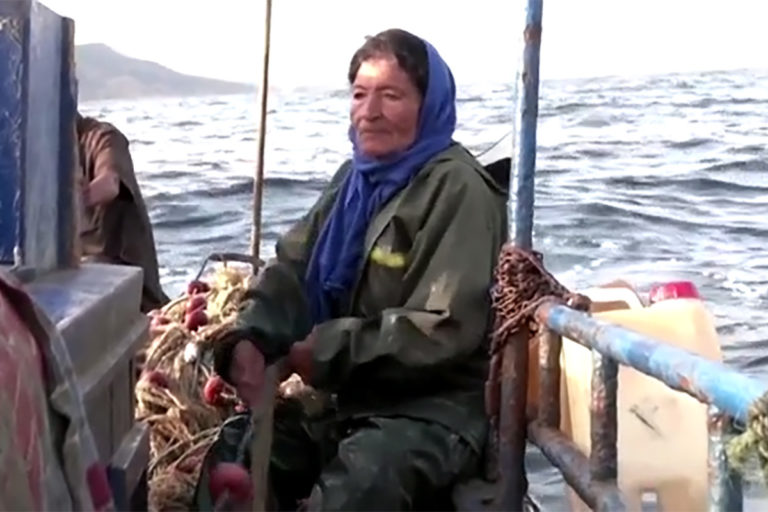
A Tunisian fisherwoman and her companion: the sea

0
A Tunisian fisherwoman and her companion: the sea

Zohra Trabelsi, 75, is the only fisherwoman among dozens of fishermen in her coastal town of Nabeul, Tunisia.

Launch of our new website

0
Launch of our new website


After several intense weeks of development, the Tunisian Society for Sustainable Fisheries (TSSF) and its partner the Media Observatory for Sustainable Fisheries in Africa (MOSFA) are proud to present the new TSSF website!

This site has been designed for all players in the fishing and aquaculture sector (fishermen, shipowners, researchers, experts, journalists, students, technicians, engineers, exporters and all other professionals in the sector, etc.).


Developed by a member of MOSFA and the result of many efforts by members of the association’s management board, this new website aims to encourage the participation of fishermen and partners in enriching its content. Thanks to the “SAMAKA” content sharing platform, we are preparing its evolution towards a web platform that allows the dissemination and sharing of information or multimedia content.

to contribute, go directly to the submit your content page

Finally, to keep direct access to all new content on the site, we have integrated a newsletter. We invite you to register now!

A more pleasant experience for visitors

The site adapts to all devices (smartphones, tablets and desktop computer). This means that visitors’ browsing experience will always be optimal!

Do not hesitate to send us your comments via the contact form.

Hoping that you will appreciate this new way of communicating with you, we wish you a good discovery of the site!!!

Good navigation!

Advertising on this website

0
Advertising on this website

It is now possible for you to buy on this web page a 300 x 250 px format advertising island or a 729 x 90 px format advertising banner for a period of one month.

To order

Email your ad file to contact.tssf@gmail.com.
Remember to include your mailing address.

Workshop of consultation of the civil society (OSCs ) on the reform of the small scale fishing policy in the African countries

0
Workshop of consultation of the civil society  (OSCs )  on the reform of the small scale fishing policy in the African countries

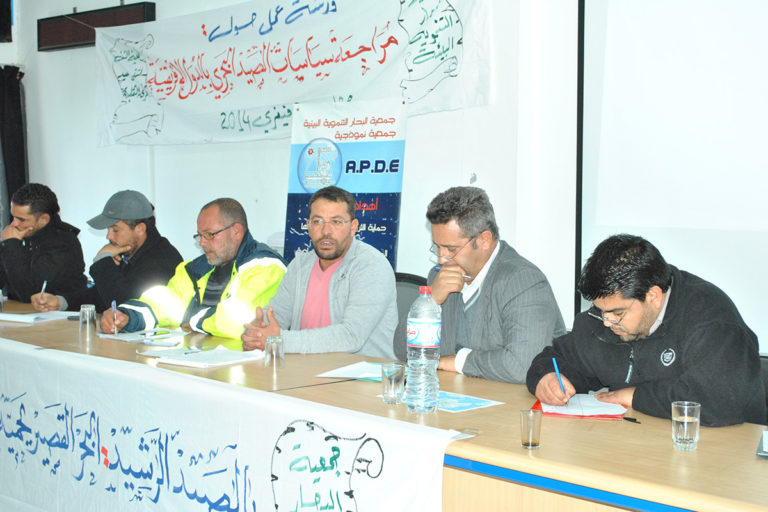
We, representatives of the organizations of the civil society working in the fishing sector, gathered in Zarzis on February 2nd, 2014, on the framework of a workshop of preparation of the second Conference of the African Ministers of Fishing and Fish farming (CAMFA) which will be held in Durban, South Africa from 24 to 27 March 2014.

We confirm our support for the structures emanating from the African Union which working on the fishing sector, and to their partners working on a rational sustainable exploitation of the halieutic resources.

We appreciate the participative approach of the “Partnership for the African fishing” of the NEPAD (PAF) and the African Union, for the elaboration of the document of reform policies of fishing in the African continent, by inviting the organizations of the civil society to share their opinions and their expectations of this strategy of reform, in order to insure the durability of the exploitation of halieutic resources, and maintain the livelihoods of the small fishermen

We totally adhere to the recommendations contained in the statement of Banjul (Gambia) of the civil society ; on the sustainable livelihood in Africa, in prelude to the first Conference of Africains Ministers of Fishing and Fish farming, held by the NEPAD on September 23rd 2010 (Appendix N°1).

We call the Tunisian government to adopt the following recommendations and to include them in the final document, which will be submitted to the second conference mentioned above.

  • The consultation and the workshop :

After its participation to the workshop of consultation of the African civil society held in Naivasha, Kenya on December 17th and 18th, 2013, the Tunisian Association for the development of Artisanal Fisheries (ATDEPA) organized an electronic consultation from the 13rd of January 2014 (see brochure Appendix N°2).

Several Tunisian associations were informed through the emailing and the social networks to express their opinions about the revision of the fishing policies in Tunisia and in the African continent.

Also the African Confederation of Professional Small scale Fishing Organisations (CAOPA) organized an e-Consultation on the Pan African Fisheries Policy and Reform Strategy published on its website http://caopa-africa.org/ on January and February, 2014. The representatives of the African OSCs, are called to answer the following questions:

  1. How should African countries reform ‘access allocation policies’ in the fisheries sector?
  2. How should the contribution to food security by fisheries be promoted and safeguarded in fisheries reform?
  3. How can meaningful participation and transparency in fisheries be realized?

The ATDEPA organized on February 2nd, 2014 in association with ” The pêcheur  ” Association for the development and the environment in Zarzis (Tunisia), a workshop on the reform of the fishing policy in Tunisia.

Representatives of the following associations participated in this workshop (Appendix N°2) :

  • The fisherman Association for the development and the environment
  • Tunisian Association for the development of the Artisanal Fisheries
  • The syndicates of the coast and artisanal fishing of the Tunisian Union of the Agriculture and Fishing.
  • Grouping of development of fishing of Ajim (Djerba)
  • Grouping of development of fishing of Homet Souk (Djerba)
  • Grouping of development of fishing of Ghannouch (Gabés)
  • Jilij Association of the marine environment (Djerba)
  • Association for the protection of the Island of Djerba
  • Association for the Defense of fisherman of Ghannouch (Gabés)
  • Mutual Basic company of the fishing Services in Medenine
  • Works schedule

The opening ceremony was chaired by Mr Chamseddine Bourassine President of the Association the ” fisherman ” for the development and the environment. In his speech, he greeted the cooperation with the UA-NEPAD for the reform of fishing policies. He also returned on the gravity of the situation of the African fisheries which suffers pressures exercised by several economic activities among which in particular the fleets of national and foreign industrial fishings.

Four thematic presentations were presented during the workshop to enrich the discussions of the participants:

  1. The small-scale fishing in Africa and the role of the civil society in the protection of the coastal resources : presented by Mr. Fathi Naloufi representing of the interprofessional Grouping of fishing products.
  2. The role of the mutual companies of fishing services in the supervision professionals and the selling of their productions : presented by Mr. Mohammed Kazzouz Director of the Basic mutual company of the fishing Services in Medenine.
  3. Strengthening capacities of the professional small-scale fishing organizations in Tunisia and in North Africa and the creation of the regional platform presented by Mr. Naoufel Haddad Genaral Secretary of the Tunisian Association for the development of the small-scale fishing.
  4. Revision of the fishing policies in Tunisia and in the African countries presented by Mr. Naoufel Haddad.

The proposals, collected through the electronic consultation, were presented to the participants (Appendix N°3).

In the light of the discussions which took place between the participants, and after synthesis of the various proposals, the following recommendations were concluded :

  • The recommandations :

Governance and participation of small fisherman

  1. We call all the participants of the fishing sector to recognize the importance of the small-scale fishing for the social, economic and cultural standing. So it is recommended to support its development during the implementation of the development strategy of the sector,
  2. We express our dissatisfaction towards the State policies in the sector which are perfectly aligned to encourage the big producers to the detriment of small fishermen. Consequently, we ask to insure decent working conditions for a decent life by the creation of a ” national fund for the development of small-scale fishing “. This fund will support the sources of income of 36 thousand families (more than 66 % of the workers in the sector) and will also contribute to the relaunching of the traditional methods of fishing (fix fishery with the leaves of palm tree).
  3. We recommend the implementation of a cooperation mechanism between the administration and the civil society to rebuild bridges of reliability between them. We ask for the modification of the legal texts which put obstacles to the participation of the associations of the small fishermen in taking part in the structures of decision in the various domains of their activities.
  4. We recommend the revision of the current governance of the sector to allow all the associations of the small-scale fishing to participate in the process of formulation and application of the policies, enabeling a sustainable exploitation of the halieutic resources. So, we ask, for the creation of an ” High Council of fishing ” regulatory measures of which went unheeded for a long time.
  5. We recommend the creation of a ministry of fishing and fish farming to take care of all the aspects of the sector and in particular the socioprofessional supervision of the small fishermen,
  6. We recommend you to facilitate the access in every data of the fishing sector and in particular the results of scientific researches, statistics, formalities and the administrative decisions,

Regulations and Management of halieutic resources

  1. We recommend to revise the Tunisian legislation governing the practice of the fishing which is not any more as high as the international efforts to guarantee a rational exploitation of the halieutic resources among which the Code of conduct for a responsible fishing and its technical directives for its implementation .
  2. We recommend to revise measures relative to the technical conditions of construction of fishing units to allow the small fishermen to renew their boats on one hand and stop the attribution of new authorizations of construction of trawlers as a replacement of dilapidated units. We ask for the application of the proposal to reduce the number of trawler in the gulf of Gabés by awarding compensations to the shipowners who demolished their units or change activity. These bonuses can be granted by the Fund of biological rest. This fund, where all the fishermen contribute to it, has to finance the programs to protect the coastal resources and the reduction of the effort of fishing.
  3. We recommend to give the priority in the exploitation of the marine coastal zones to the small-scale fishing such as recommended in the Code of conduct for a responsible fishing of the FAO (paragraph 6.18 see Appendix 4). This measure will decrease the conflicts of use between the industrial fishing and the small-scale fishing. Thus, we ask for a fishing zone reserved for the small-scale fishing 2 mile wide in the North and the West and reaching the depths of 20 m in the bays as indicated in the joined map ( Appendix N°5). This zone will be under rigorous control by competent authorities to forbid any operation of illegal fishing which incur severe penalties. These penalties must be repulsive reaching the seizure of the ship and the definitive withdrawal of the certificate of commendation.
  4. We recommend the revision of the legal measures which govern the zones of anchorage reserved for trawlers in the Gulf of Gabés to reduce their surfaces and to oblige the captains of fishing to inform the supervision authorities in the entrance and in the exit of these zones (Appendix N°6).
  5. We recommend to adopt a regulations except for sailing and sports fishing to limit its impact on the resource.
  6. We encourage the realization of the programs of conservation of the resources and the on-sea control, in particular following the activities of fishing ships by satellites,
  7. We recommend to allocate a part of the national quota of the tuna fishing to the units of the small fishermen so that they can target this kind of fishes,
  8. We recommend the adoption of the joint management of the coastal fisheries by strengthening the capacities of the partners first of all and the regional training of committees represented by the administration, the profession, the scientific research and the civil society ,
  9. We recommend the participation of the profession in the control of the foreign ships in Tunisian waters’ jurisdiction and in particular trawling in the continental shelf,

Socioeconomic promotion of small fishermen

  1. We recommend the revision of the social security system of the fishermen by establishing a special regime for the small fishermen which will take into account the fragility of their income due to their very seasonal activities. We also propose that the national insurance contribution is retained according to the amount of the sales of their productions.
  2. We support the experiences of diversification of the fishermen’ families income, and we wish to facilitate the exercise of their small business and the small-scale fish farming to cover their needs during the stops of their fishing activity because of weather conditions or pollution.

Harbour and administrative services

  1. We recommend the support of the fishermen during the conflicts of use of the coast with certain economic activities by giving them the priority to exploit spaces of the coast for storing their equipments and for an access to the sea.
  2. We recommend to supply the necessary services in the various natural sites of landing of the units of the small-scale fishing. These services include landing quays, fish sales market, the premises of nets warehouse, oil supply …
  3. We recommend to the administrations to develop local services for the benefit of the fishermen isolated in the natural sites. We also ask to make the fishermen craftsmen benefit from a bonus of production in particular the subsidy of fuel for the use of the gas outboard motors.

Cooperation with the nearby countries and the international organizations

  1. We recommend to support the efforts of the civil society to ratify the ” voluntary directives to guarantee sustainable small-scale fishing ” during the next meeting of the fishing Committee (June 2014).
  2. We recommend the institution of a biological rest in the Mediterranean Sea and the cooperation with local countries for the control the fishing units raping this measure.
  3. We recommend the strengthening of the bilateral and regional cooperation for the effective management of the shared halieutic resources, and the protection of the ecosystems. We call to the expansion of waters under Tunisians jurisdiction and the creation of reserved fishing zones and shared with the nearby countries such as certain African countries,

Protection of marine environment

  1. We recommend the creation of protected marine areas in the coastal zones (such as the zone of Ras Rmel Djerba) and the elaboration of management plans allowing the native fishermen to practise a responsible fishing and the participation in the structure of management of the protected marine areas ,
  2. We recommend to multiply the efforts to reduce the marine pollution resulting from industrial units and plants of purge and from desalination of the sea water.
  3. We recommend the realization of a study of the coastal band to identify the zones to be fitted out in artificial cliffs by involving all the organizations of the small-scale fishing in the targeted zones. We ask that the dumping of the artificial cliffs is followed by the representatives of the fishermen to insure the good execution of the protection program of the small-scale fishing zone,

Applied scientific research

  1. We recommend to set up a research program and scientific studies in the diverse domains of the small-scale fishing in Tunisia such as: development of selective fishing techniques, control of energy, the development of the small-scale fish farming, the valuation of the fishing products, the socioeconomic promotion…
  2. We recommend the improvement of the statistics affecting the various activities of fishing by modernizing the administration and the use of ICT,

Development of the capacities of the small fishermen and support for organization

  1. We recommend the support of all the organizations of small-scale fishing to unite within the framework of a national platform to develop the capacities of their members and insure the participation on national, regional and international level,
  2. We recommend the revision of the legal texts governing the structures of services for the fishermen such as the grouping of fishing development and the mutual basic company of fishing services. These structures have to allow the small communities to create their structures towards cooperatives allowing them to realize commercial transactions in the profits of their members.

The participants expressed their thanks and gratitude for the organizers of this important workshop and take the opportunity to call all the structures of the small fishermen to join the initiative for the creation of a platform of associations of small-scale fishing in Tunisia.

Workshop facilitator and rapporteur Naoufel Haddad